Reading for Change: Scavengers
This event is over now. Please browse the page for recordings or reports from it.
about the event
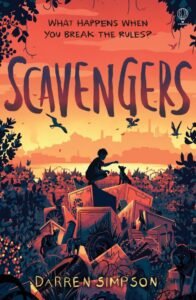
Scavengers by Darren Simpson was the first book in our Reading for Change series. It was an entry point to SDG 11 Sustainable Cities and Communities.
How is life for people who live their entire life in the shadows of others, yet without them the city could not sustain? They are visible, yet invisible to most of us most of the time. Drawing from the theme of landfills and waste this conversation will put waste pickers at the centre, looking at their role and perspective of sustainable cities and communities. Usually the conversations around people involved in waste management are not empowering, especially in their representation in writing which tends to be descriptive. The YA novel by Darren Simpson, “Scavengers” allows us an ingenious approach to tackle this topic from a very different perspective.
To know more about SDG 11 click here.
collaborators
Champaca Bookstore
Champaca is an independently-owned women-run bookstore and cafe. Started in Bangalore, they have two branches in the city and another in Goa. Champaca’s collection ranges from caste narratives in rural India to dystopian futures where people can move the earth; moving personal memoirs on mental health to poetry bound in sari cloth; and translations from over twenty languages, from India and internationally.
Science Gallery Bengaluru
Science Gallery Bengaluru (SGB) is a not-for-profit public institution for research-based engagement targeted at young adults working at the intersection of the human, natural, and social sciences, and engineering, art, and design. It was established with the founding support of the Government of Karnataka and three academic partners—Indian Institute of Science, National Centre for Biological Sciences, and Srishti Institute of Art, Design and Technology.
event details
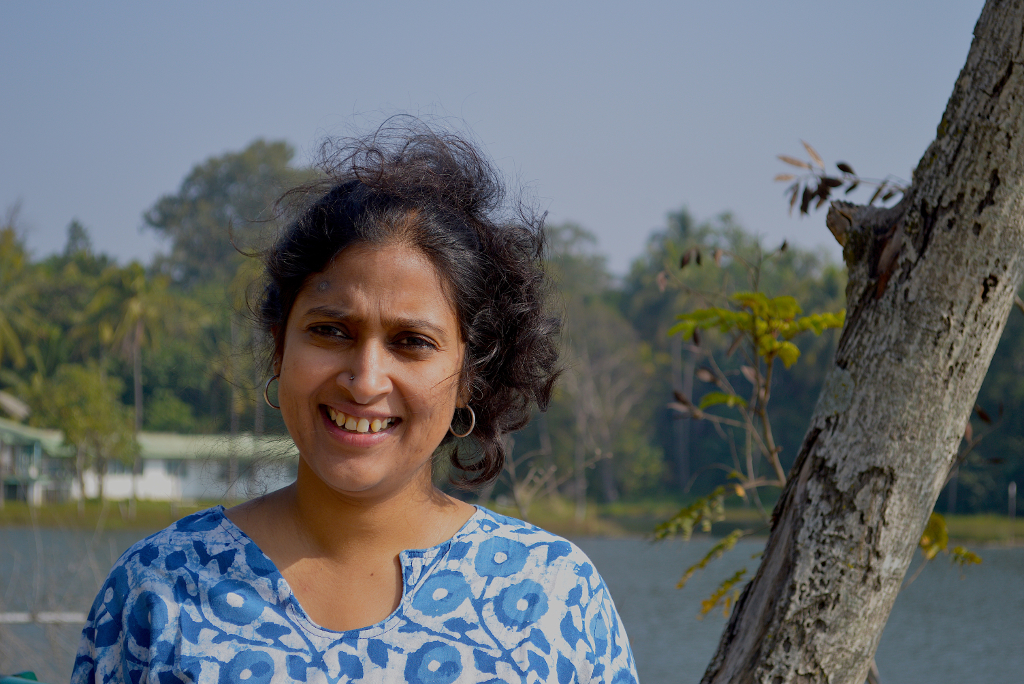
Seema Mundoli worked for the most part in conservation, and advocacy on issues of mining, land and forest rights, and education in tribal and rural landscapes. More recently she researches on the social and ecological interactions around urban commons especially in the current phase of increasing urbanization that the Indian cities are witnessing. She is also the co-author of the popular and critically praised Cities and Canopies, a book on trees in urban India. She is now a faculty at Azim Premji University.
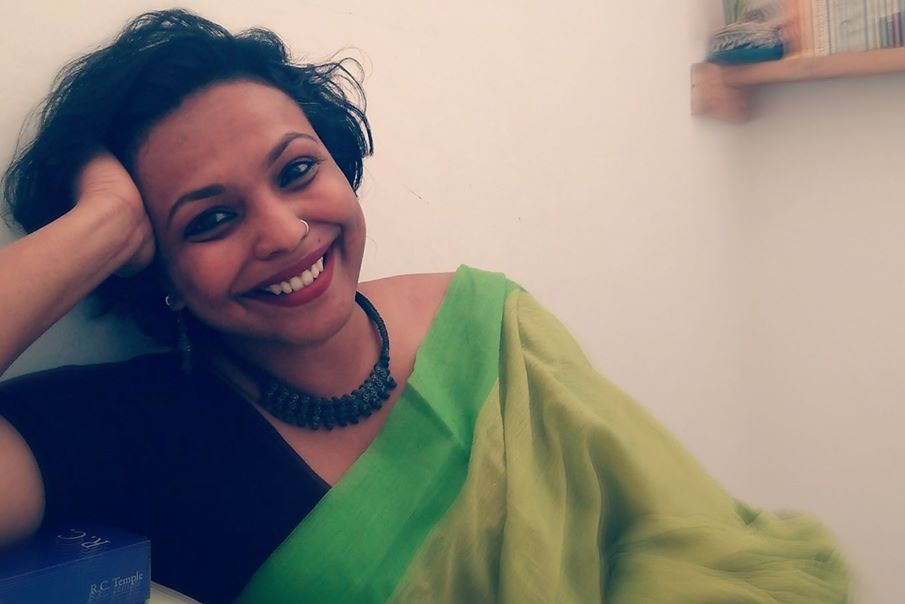
Lakshmi Karunakaran is an educator and a communication professional based in Bangalore, India. She has worked with children experiencing social exclusion in government schools, special needs schools, remedial schools, and in disadvantaged communities. Through Hasiru Dala, an organization that works with informal waste pickers she currently heads the Buguri Community Library Project which is an after school library and art centre for over 700 children of waste-pickers in Bangalore, Tumkur and Mysore.
Taanika Shankar in conversation with Darren Simpson
Darren Simpson writes vivid, unruly fiction for children. His debut novel Scavengers was a Guardian Best Book of 2019, the first book chosen for ‘Reading For Change’. Scavengers was also selected for 2019’s national Summer Reading Challenge. Darren also provided the story for The Dust on the Moth, a crowdfunded multimedia novel for adults.
He lives with his wife and two sons in Nottingham, where he has worked with the Literacy Trust to promote reading for pleasure. He loves using otherworldly settings and unconventional characters to explore bravery, self-discovery, and the endless quirks that make up our real lives.
On 25th August at 6.30 p.m. Darren was in conversation with Taanika Shankar, an undergraduate in economics at Azim Premji University.In case you missed the Q&A, here is a summary.
Q. How did you feel to get your first book published?!
Q. What is some of the research and train of thought/ imagination that went into creating Hinterland?
Q. Did you ever feel like living a solitary life like Babagoo?
A. I see the appeal but feel like my life and work is too interwoven with society and other people to want to do that or be able to do that. The idea of a grown man (Babagoo) living as a recluse makes you realize how much we all need people.
Q. What part of Landfill do you personally relate to the most and why?
A. I do not relate to Landfill as an adult but see the child-like innocence and curiosity in my sons. Landfill also reminds me of myself as a child in the same sense.
Q. How did the made up words come about?
A. There weren’t any made-up words initially but then someone pointed out that if Landfill and Babagoo were living away from the rest of society, they must have lost some kind of touch with the rest of the world (and Landfill had never heard/ seen the rest of the world). There was a system to decide which words would be made up: it was mainly nouns and words of common use – like wolflings for wolves, bleaters for goats. Grubbins was used for food because grubs is an informal term for snack.
Q. The animals in the book were named after authors; was there a personal connect to those authors?
A. They are authors I like. Kafka the goat was related to a personal anecdote: I had been to an animal park with my children and saw a goat there and for some reason thought of its name as Kafka. When I wrote the book, I had to name the goat Kafka.
Also, Babagoo named all the animals, so in a way it’s a clever play since we know so little about his past. The fact that Babagoo had named all the animals after famous writers must have meant he was well-read despite seeming like a haggard recluse.
Q. What is your favourite character from the story?
A. Babagoo! He was also the most fun to write because of his complexity and all the layers that his personality has.
you may also like