How it all began


Back in 2018, it was an idea from Anurag Behar (Trustee Wipro Foundation, Chief Sustainability Officer at Wipro & Vice Chancellor, Azim Premji University) that got things started. The thought behind it was that, while there were several city based platforms and forums to discuss issues of the social sector, was there a need and therefore, an opportunity to ground the discussions in science, particularly with regard to environmental issues? And how could something like this be used as an anchor to join the dots with policy and civil society organisations?
This idea thus sparked a conversation with Prof. Satyajit Mayor (then Director National Centre for Biological Sciences), where they discussed the possibility of how NCBS as a research institution could get involved with work on the ground happening in the city. More conversations on this followed between PS Narayan (Head of Sustainability at Wipro Ltd., and the Managing Trustee & Head of Wipro Foundation), Anurag Behar and Prof. Mayor. BIOME Environmental Solutions was already working with Wipro Foundation and Vishwanath Srikantaiah, Founder BIOME Environmental Solutions also joined these discussions. Jahnavi Phalkey, (Founding Director of Science Gallery Bengaluru) and Harini Nagendra, (Director of Research Centre, and Director, School of Climate Change and Sustainability, at Azim Premji University) were also invited to the group.
It was a coming together of organisations and individuals known to have not only valuable experience and expertise in their domains but also a more progressive vision for the city of Bangalore.
The group was initially called Bangalore Sustainability Forum. The name was subsequently changed to Bengaluru Sustainability Forum to be more inclusive and to acknowledge the gap between the city’s history and the name ‘Bangalore’ being a representation of its newer identity as an IT hub.
“I felt it would be good to see how NCBS could play a convening role… bringing together diverse stakeholders and sectors and creating an arm/wing at NCBS that could coordinate this. It seemed to me that there was a lot of good work happening in silos and very few avenues for individuals and organisations to come together to safely connect and reflect. I liked the idea that despite NCBS being a small institution, we could play a role that was outsized; if we could pull this off – it was possible.” | Satyajit Mayor, NCBS
“We met regularly, it was interesting. There was a strong commitment of bringing research into policy and citizen interventions. Policy as it involves active citizenship not just Govt related. That balance has always been there.” | Jahnavi Phalkey, SGB
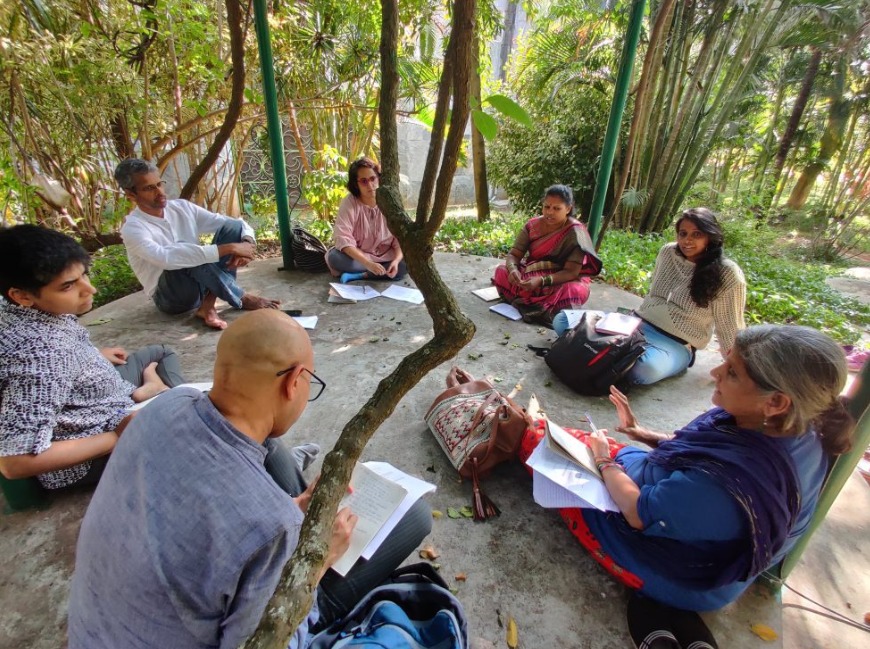
”Deliberative spaces are not there in the city – for sustainability in its entirety…There are other pockets doing this now.” | Lingaraj Dinni
Realising the idea
To give shape to this idea, it was agreed that the group would organise theme-based retreats to provide a space for individuals, communities, scientists, practitioners, officials, institutes to share experiences, studies, knowledge, and findings.
This idea thus sparked a conversation with Prof. Satyajit Mayor (then Director National Centre for Biological Sciences), where they discussed the possibility of how NCBS as a research institution could get involved with work on the ground happening in the city. More conversations on this followed between PS Narayan (Head of Sustainability at Wipro Ltd., and the Managing Trustee & Head of Wipro Foundation), Anurag Behar and Prof. Mayor. BIOME Environmental Solutions was already working with Wipro Foundation and Vishwanath Srikantaiah, Founder BIOME Environmental Solutions also joined these discussions. Jahnavi Phalkey, (Founding Director of Science Gallery Bengaluru) and Harini Nagendra, (Director of Research Centre, and Director, School of Climate Change and Sustainability, at Azim Premji University) were also invited to the group.
It was a coming together of organisations and individuals known to have not only valuable experience and expertise in their domains but also a more progressive vision for the city of Bangalore.
BSF retreats
The Retreats have played a key role in defining BSF’s journey over the years. They have also helped to bring together people from different walks of life working on a particular theme; to share, learn, discuss and ideate.
The initial discussions within the forum focussed on how to build conversations at these retreats around the specific themes. The idea was that, with the right stakeholders and perspectives, what would emerge organically would be a set of directive principles of where and how the forum needs to ac It was agreed that Wipro Foundation would offer funding as a recurring grant to sustain and support the work, while NCBS would offer the physical location. The constraining factor of a budget made the group identify leverage points to maximise outcomes. The SDGs offered a guiding framework for a discourse on Sustainability and Development and the Retreats offered the space for a deep dive into it. The School of Ancient Wisdom has been the venue for the BSF Retreats so far – offering a welcoming and safe space for conversations and collaborations.
Since 2018 BSF has hosted four Retreats:
2018 April 16-17: Water
2018 September 10-11: Biodiversity
2019 March 26-27: Climate Change
2023 Jan 27-28: Climate Resilience
An added objective of the very first BSF Retreat in 2018 was to discover the direction and aim that the forum wanted to pursue, based on discussions that emerged here. Some of the key participants at this Retreat included Dr (late) Isher Judge Ahluwalia, SharachChandra Lele, Rohini Nilekani, – all of whom listened and shared a wide range of inputs; helping BSF craft its subsequent approach.
Based on the learnings from the early Retreats where the participants were mostly from a known circle and primarily researchers, thinktank members, in the more recent Retreats, we have tried to move the needle and have consciously involved more community members and representatives of a wider section.
Looking back, the BSF Retreats have contributed to both – directed strategic conversations as well as the evolution of the Small Grant Programme.

BSF’s Small Grants Programme
Gradually and organically, potential ideas for work on the ground emerged from the discussions at the Retreats. By Year 2 (2019), BSF’s Small Grants Programme had been initiated – to support others to do more than a sum of their parts.
The essential idea was that hyperlocal ideas in a large city like Bangalore don’t get enough funding as they are considered experimental and not ‘mainstream’ enough. So BSF came forward to support these ideas with the hope that it could put the projects in a better phase to raise funds for the next level of funding that they might need.
The Small Grants Programme has now completed 7 cohorts and supported 40+ projects in the city. While the impact of some projects have been more evident than others, a key focus for BSF has also been the process. The intent being that the BSF grant and process hopefully offer a leg-up to these projects for their next phase – either longitudinally or for something new.
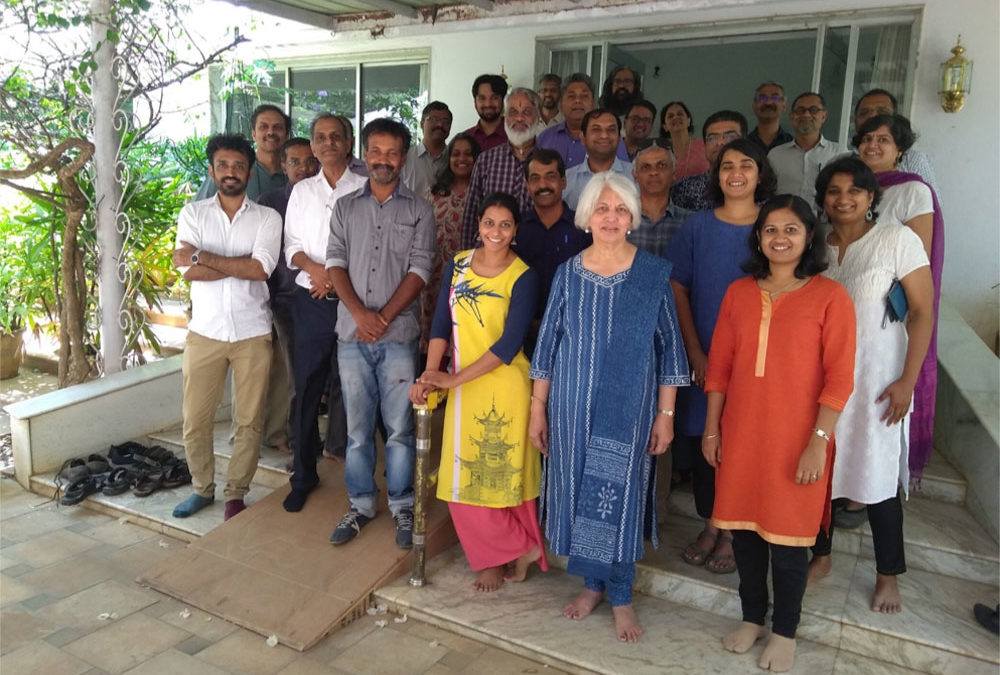
”Being a coordinator at BSF has taught me how to be a facilitator and to see the value that can provide. It has also helped me understand the power of community building.” | Namrata Narendra
What makes BSF
One of the key elements that has helped shape BSF is its people. Diverse backgrounds, disciplines and experiences – coming together and towards a shared vision for the city. From believing in the initial idea to engaging in early conversations, facilitating the various engagements, anchoring the different processes and envisioning a future for the city.
While some members of the group have remained constant over the years, others have played a key role and then moved on.
Consistent, Recurring Support from the Wipro Foundation
Offered with the freedom and flexibility to shape direction organically, this support has played a key role in enabling BSF’s convening efforts and in realising several of its ideas and objectives.
The idea of collaboration has been central to BSF since the outset – from its formation to the different engagements facilitated. Even the BSF Small Grants Programme requires that the project is a collaboration between 2 or more entities.
Working with the intangibles
With its primary role as an ecosystem player, a lot of BSF’s work is about creating opportunities to enable different actors in the city to come together and engage with each other across their silos. Beyond any immediate tangible impacts this may have had in the city, of perhaps greater significance are the connections formed, the ideas sparked and acted upon (many of which may not have found support in traditional grants cycles), projects that evolved in unexpected ways, and an attempt to grow a community that can provide scaffolding support to others in the network, both directly and indirectly. BSF, today, is getting known as a place that can hold space for a multitude of ideas and approaches, grounded in both science and community.


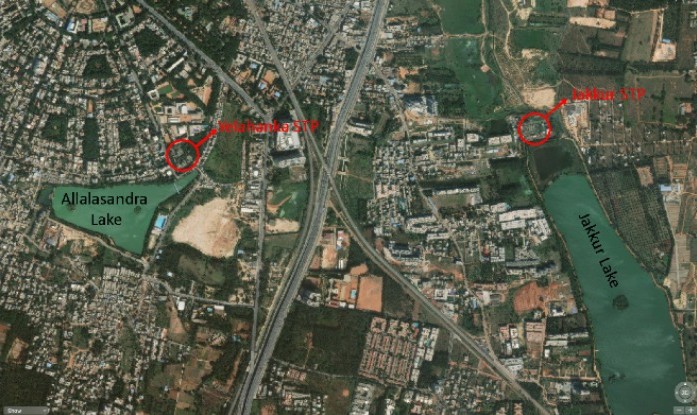
“BSF Grants have helped shape the projects (through the SGP) in the context of sustainability and Bengaluru.” | Jagdish Krishnaswamy
The Definition of Sustainability
This has been a consistent attempt, in the work and approach of BSF, to go beyond just the environment, to include social justice and equity as integral aspects.
“It is rooted at the ground level and has a bottom up approach to sustainability.” | LS Shashidhara
Since its inception, there has been an effort to ensure that BSF’s work is determined by an understanding and recognition of the prevalent needs and issues in the city. Consequently, this has afforded a certain flexibility in its approach and functioning, which has played a positive role in being able to respond to what is needed. For instance, the work during the pandemic quickly switched to an online mode while still ensuring the core aspects of collaboration, interdisciplinarity etc. It also allows for the forum to try out different modes of engagement to reach a wide range of audiences.
“BSF’s journey is a story of organic growth much of which I now realise could not have been conceptualised in a meeting room. The journey has been purposeful and led by a strong intent to further the sustainability dialogues in the city.” | Nakul Heble
And miles to go…
It has been seven years since BSF was formed and, while we have covered ground, we believe there is still a lot to be done. Being a city-level, horizontal platform, we would like to be able to enhance our work with regard to equity, justice and access; deepening connections with other institutions working on-the-ground. Our efforts to enhance communication material and resources in a bilingual mode to ensure wider accessibility, will continue.
BSF will also work toward building a stronger presence online through its website; making available resources on sustainability and the city in an easily accessible format.
Building on and strengthening the SGP community and sharing these learnings for a wider city audience is something that the Forum is working on.
Some key questions for BSF in the upcoming future would centre around the role it can continue to play as a catalytic platform, particularly in the context of growing mega infrastructure projects in a city like Bangalore that are adding to challenges for sustainability.
How will BSF continue to be strategic in its growth and create avenues for engagement with policy?
How will we engage with the politics of sustainability?
How can we contribute to a repository of all the research (academic and empirical) for the city with the potential to connect with the larger ecosystem.
“In sum, BSF’s role is to support and sustain initiatives of different kinds that might support sustainability in the city; irrespective of who takes it on.” | Jahnavi Phalkey
“BSF should continue to play a key role connecting ideas, institutions and funds. Working toward whatever is good for the city as a whole.” | PS Narayan
“Community building will continue to be BSF’s biggest contribution to the city and sustainability.” | Namrata Narendra