Focus Areas

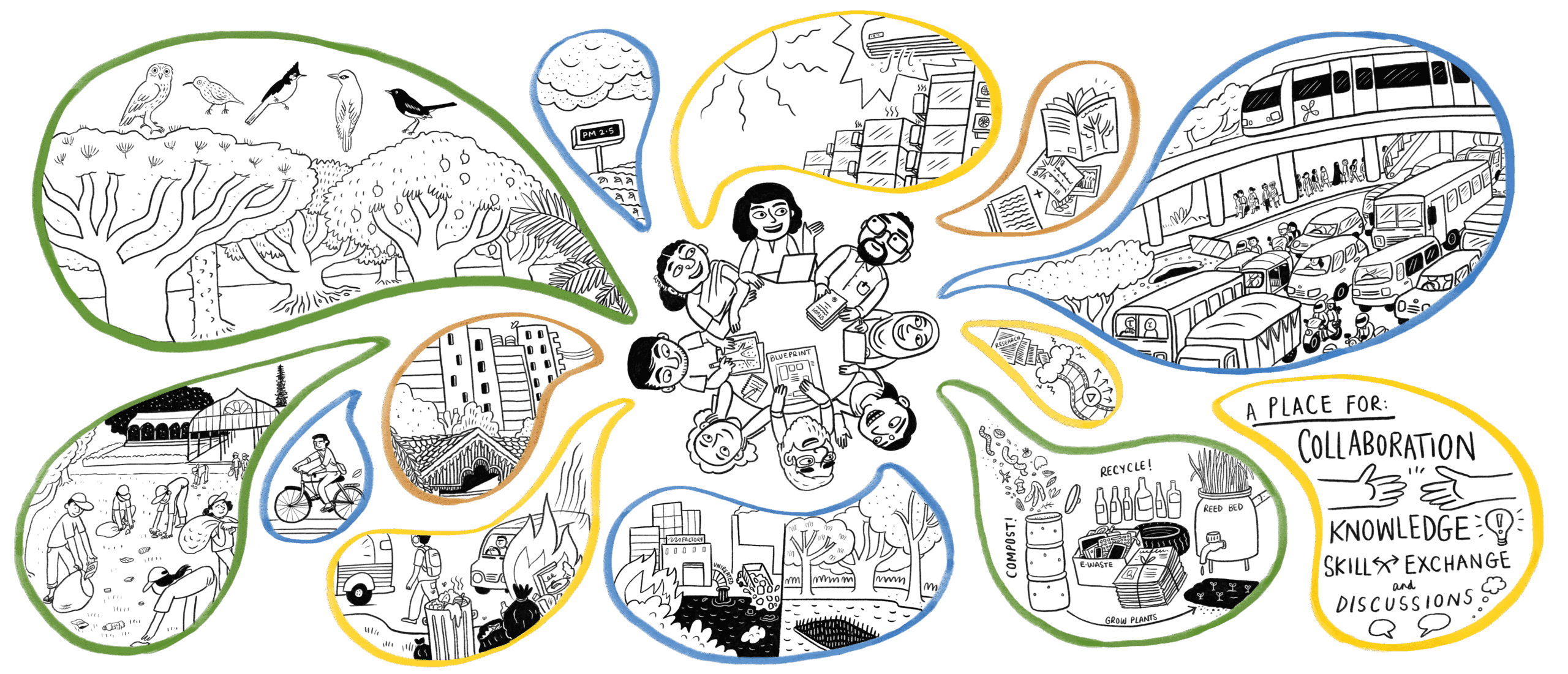
Bengaluru was once defined by its cascading system of interconnected tanks, a large number of parks and a salubrious climate. Over time however it rapidly expanded in all possible directions, without corresponding planned infrastructure. The result: overstretched systems, fragile ecosystems, and a city struggling to keep pace with itself.
Poor urban planning, unchecked concretisation, and fragmented governance are at the root of many of Bengaluru’s problems, with climate change adding additional stress in the recent years – bringing intense rains and relentless heat. Not only does this exacerbate the already existing inequalities and vulnerabilities, the resultant challenges also have profound implications for our ecosystems, economies and social fabric.
Bengaluru, as any other city, is a complex system composed of both natural and manmade infrastructure. From housing, water, energy to public health, waste management, transport and more – these interconnected systems are integral to a well functioning city. The city’s future depends on how we reimagine and rebuild these interconnections: between people and nature, infrastructure and ecology, memory and aspiration.
Let’s explore some of these dimensions in more detail to understand the challenges—and the opportunities—that shape Bengaluru today.