urban biodiversity


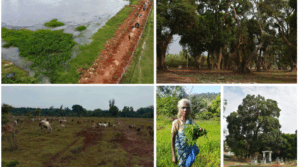
Bengaluru, once famous as the garden city, is one of the world’s fastest-growing urban centres today. It has deep ecological roots: from rocky hillocks and forests to its once-extensive network of lakes, wetlands, tree-lined boulevards, and parks. Leopards skirt its edges, black kites circle its garbage dumps, slender lorises shelter in fig trees, and rock agamas bask on compound walls. All of this life – both the seen and unseen flora and fauna – comprise the city’s urban biodiversity.
Biodiversity is both fragile and enduring, scattered across parks, institutional campuses, home gardens, lakes, and even old cantonments. What survives—and what is lost—shapes not only the city’s ecological future but also its social and cultural fabric.
Cities the world over are rediscovering the value of nature. Singapore has transformed into a “City in a Garden,” New York repurposed an old rail line into a flourishing ecological corridor, and Cape Town actively protects its endemic fynbos within city limits. They show how biodiversity softens the impacts of climate extremes, filtering air and water, and offering citizens spaces of rest, connection, and renewal.
Letting biodiversity thrive is integral to making cities sustainable. We invite you to join us for dialogue and reflection on the city’s habitats and species—and on what it will take to let this diversity endure as the city continues to grow.
Bengaluru’s Biodiversity: A snapshot
Tree cover: 102.58 km² (14%)
Tree census: ~3 lakh; >15 lakh yet to be enumerated
Avenue trees & streetscapes: ~195 ha
Total waterbody area: ~2,282 ha
Per capita green space (current): ~8.3 m²
Per capita green space (recommended): 10–12 m²
City Biodiversity Index (2024)
The CBI of Bengaluru was developed by ICLEI- Local Governments for Sustainability, South Asia and The University of Trans-Disciplinary Health Sciences and Technology (TDU), supported by BSF. The report that emerged from it offers a comprehensive view of where the city stands against biodiversity markers.
Click the icon to read more