urban climate change


Like many fast-growing urban centres, Bengaluru sits at the intersection of multiple pressures, including climate change. The city is heating up, its dense construction absorbing and radiating more warmth than its vanishing natural landscapes. Rising temperatures trigger a chain reaction – higher energy use, water stress, and worsening air quality – felt most acutely in low-income neighbourhoods where homes trap heat and access to cooling or water is limited.
Bengaluru’s vulnerability extends beyond its borders, tied to the shifting rhythms of the rural and peri-urban regions that sustain it. As the climate changes, so do livelihoods and migration patterns, reshaping the city itself. Climate change affects everyone, everywhere although not in the same ways and not equally. Sometimes, those who have done nothing to contribute to this global phenomenon are at the receiving end of its most harsh effects.
This page invites you to engage with how Bengaluru is responding to climate challenges, and its impact on every segment of society, and to be a part of the larger movement to strive for the better.
Bengaluru’s Weather: A snapshot
Temperature increase per decade: ~0.23 °C (since 1975)
City cores 3–5 °C hotter than peri-urban surroundings
Land Surface Temp (LST) averages 38.6 °C
Hotspots reach 44–48 °C
Night-time ~1.4 °C warmer than rural areas
Park cooling capacity: ~347 m beyond boundary
Built-up area: 87.6%


Reclaiming the
Commons
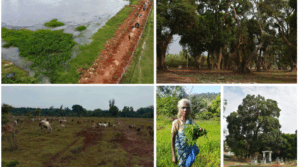
The primary objective of this project is to map the various common resources in the region, foster awareness and appreciation of commons among children, youths and other local actors. The project aims to empower the local community to take an active role in protecting these vital resources.
Click the icon to read more