urban mobility

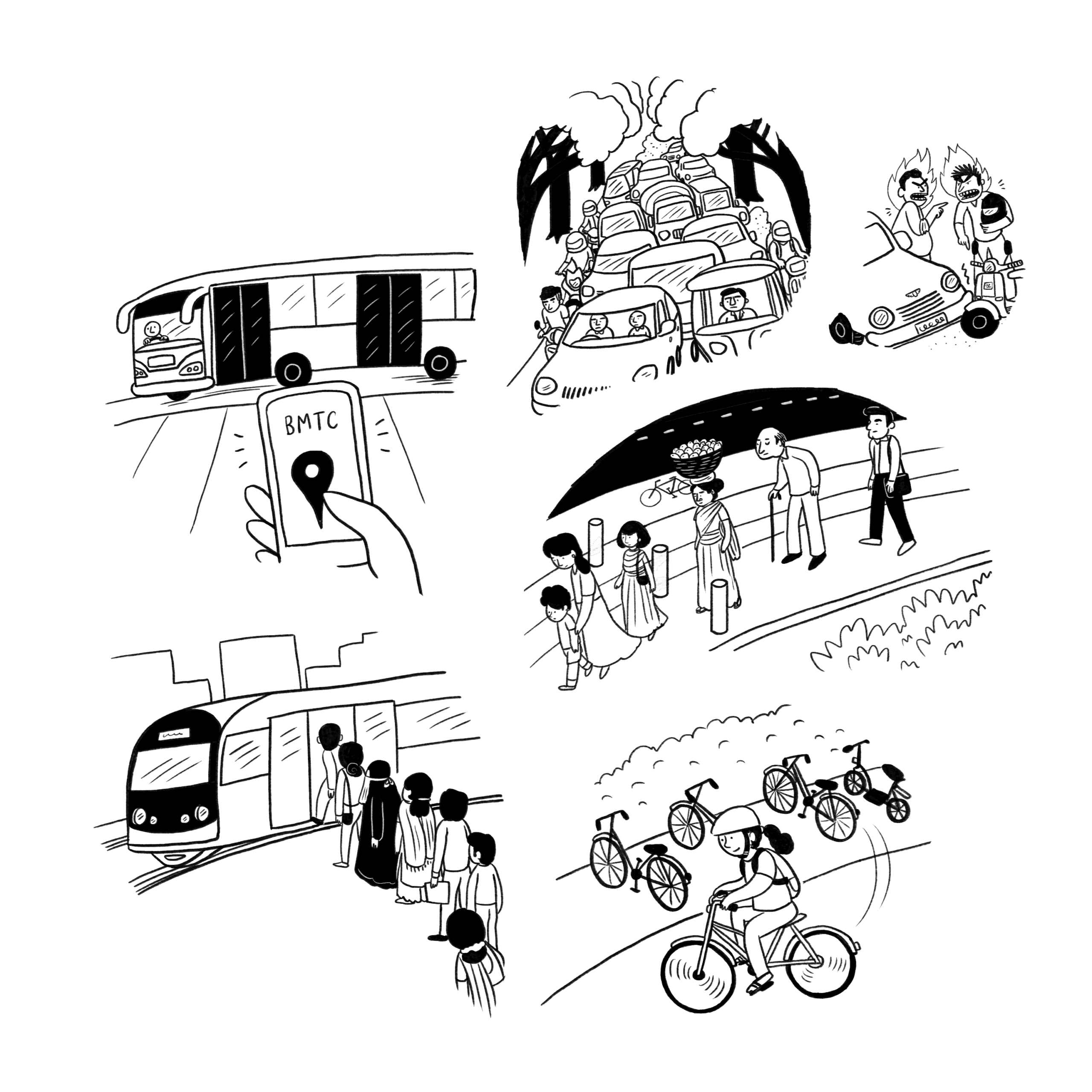
Bengaluru’s population has grown by over 40% since 2011 and is expected to reach 20 million by 2031. With more than 80 lakh registered vehicles – nearly 50 lakh of them two-wheelers – the city’s roads are among the most congested in the country, and accidents involving two-wheelers remain the highest. Every day, over a thousand new vehicles join this already saturated network.
Despite a fleet of more than 6,500 public buses, ridership continues to fall, held back by high fares, limited last-mile options, and the convenience of private transport. Metro and suburban rail systems are expanding, yet congestion persists.
We invite you to engage with the concerns around mobility as the city expands. Our focus is to bring together voices from policy, planning, and everyday life to ask how the city can move differently, toward systems that are safer, more efficient, and inclusive for all.
How Bengaluru
Travels
Two wheelers: 82.4 lakh
4-wheelers: 25.2 lakh cars, 4.2 lakh cabs
In-city daily travel: 38.4 lakh (bus), 7.4 lakh (metro) and 8.8 lakh (auto)
Out-of-city travel: 2.9 lakh (bus), 1.05 lakh (train), 90,000 (airport)

Public
transport
Daily public transport usage:
Bus terminals: ≃ 2.9 lakh people
Railway station: 1.05 lakh
Airport: 90,000
Distance covered by BMTC buses: around 11.3 lakh km
Daily bus occupancy (2024): 38.4 lakh
Metro: About 7.4 lakh riders
Autos: 8.8 lakh autos; ridesharing usage unavailable
The Kaluve
Promenade
The Kaluve Promenade project is a revitalization project in a neighbourhood park that abuts a stormwater drain. It will be a contiguous walking and cycling path with pause points and green cover, offering residents recreation spaces and nature connections while being mindful of the proximity to the drain.
Click the icon to read more